Digital Reflections - Code Smiths
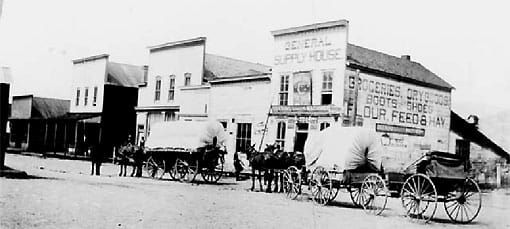
During the time of the Wild West, the distinctive architectural style of false fronts, especially for commercial outfits, emerged. The front gives the passing people the impression of entering a fancy building, luring them in and impressing passers-by while the actual building, hidden just out of sight often doesn't correspond to the lofty ambitions of the front.
What's interesting to me is the fact that people surely caught on quickly what was going on: the false front tries to convince you of something that isn't real. And with time people surely caught on to the illusion, yet the practice persisted.
AI and coding's false fronts
In software development there is a bit more honesty in the sense that a difference is made from the beginning between the frontend - what the user sees - and the backend - what the user ideally doesn't see but what makes everything work out in the end.
I've previously pointed to the cybersecurity risk of technical debt, an unstable house structure behind the false front, so to speak. The spread of AI and vibecoding in particular could make this worse, reintroducing false fronts at scale.
AI's equivalent is a way to throw up a house fast and slap a fancy front on it — vibecoding as prefab construction. Imagine one unstable house after the other, structures barely holding it together, no building codes checked for maximum occupancy or fire safety. Sure, due to the false fronts it looks nice enough to pass through such a village but would you really like to spend an expanded period of time inside such a building? Probably not. But it's exactly what is happening with software and in contrast to buildings, we as users are not obviously confronted with the technical debt waiting behind the false front. Instead, we can see it in a rise of cybersecurity incidents linked to AI-written code, for example here.
A guild of code smiths?
So here is my thesis: we will continue to see a rise in AI-written code - the market pressures are just too high. We will also see a corresponding rise in cybersecurity incidents and corresponding costs due to this. But we will also see a growing realization, that any house is only as good as its structural foundations, regardless of what the shiny front makes you believe.
This opens an interesting follow-up thesis: we could see a dynamic in software engineering that we have previously seen in other professions. Namely, that guilds of code smiths emerge to focus on artisanal engineering. At some point, either the market dynamic will switch completely from valuing quality over quantity or there will be an ever-growing niche that prioritises quality. This isn't to say that those code smiths will not use AI. But they will do so with a focus on shying away from false fronts and instead focus on sturdy structures behind the front.
Instead of glossing over poorly maintained legacy and building new false fronts we might see a growing demand for proper craftsmanship once too many houses have imploded. The question remains, how long will it take us to get there...
Subscribe to this newsletter and follow me on social media for more publications and thoughts:
LinkedIn
Mastodon